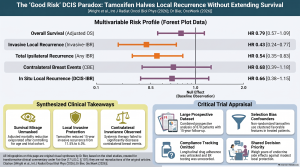
Tamoxifen for DCIS – Overview
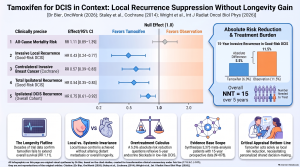
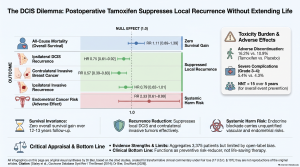
✍️ Commentary Postoperative Tamoxifen in DCIS: Treating Precancer Like Malignancy It is always tempting when a pharmaceutical intervention demonstrates a reduction in local events. However, we have to be incredibly careful when tempted to translate these findings to actual patient survival, particularly when treating ductal carcinoma in situ (DCIS). Despite being categorized biologically as a […]
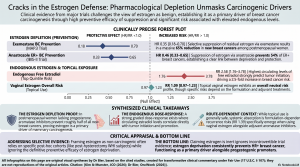
Scope and Framing This analysis evaluates the central thesis of Kim and Munster’s commentary (Kim & Munster, J Clin Oncol 2026) — that estrogen alone is not carcinogenic for breast cancer and may be protective, with progestogens being the “true culprit” — by examining whether the cited evidence supports their claims and identifying major contradictory […]
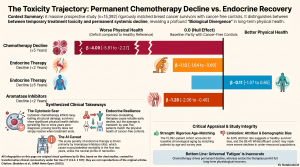
Comment: This prospective cohort analysis provides a highly needed, long-term look at the structural reality of post-treatment life for breast cancer survivors. The central strength of the study is how it separates the distinct physical trajectories of cytotoxic chemotherapy from hormone-modulating endocrine therapies, balancing them against age-matched controls to account for the background baseline of […]
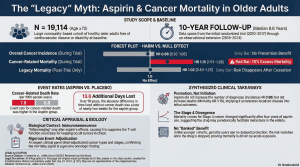
Comment: The central justification for aspirin use in primary prevention has long relied on the “Legacy Effect”—the theory that years of early exposure act as a biological investment, paying dividends in reduced cancer risk decades later. This follow-up to the ASPREE trial effectively demolishes that hypothesis for older adults. We are witnessing a stark collision […]
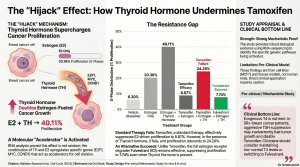
Comment: This study provides the critical ‘why’ behind the findings from this same groups earlier study. In that article, we highlighted that exogenous thyroid hormone is associated with significantly shortened survival in SR+ breast cancer patients. Now, this research explains elucidates the underlying mechanism: thyroid hormone essentially ‘hijacks’ the estrogen receptor, driving proliferation and rendering […]
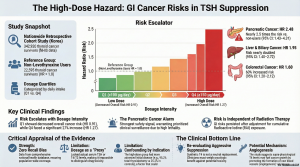
Comment: Yet another study challenging the safety profile of synthetic T4. The data here is sobering: thyroid cancer survivors on high-dose levothyroxine faced significantly higher risks of developing a second unrelated (not recurrence) cancer, particularly in the GI tract. With hazard ratios for pancreatic, liver cancers reaching nearly 2.5 and 2.0 respectively, this is a […]
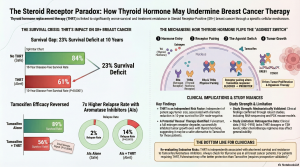
Comment: This paper serves as a major wake-up call regarding the risks of thyroid replacement in SR+ breast cancer, which compromises about 80% of cases. The mechanistic finding—that thyroid hormone can reverse Tamoxifen’s action from antagonist to agonist—is a critical piece of the puzzle explaining treatment failure. Furthermore, the observation that Aromatase Inhibitors also showed […]
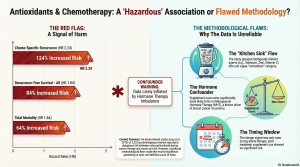
Comment: While the headline of this study suggests a clear danger, the methodology reveals significant issues which makes the results difficult to trust. They ‘lump’ biologically distinct agents—grouping trace minerals like selenium with high-dose Vitamin C—which renders the ‘antioxidant’ variable clinically meaningless. This is the same mistake done in this trial, which is really a […]